We started with two nights in an Amsterdam hotel with exploring of Amsterdam. One notable visit was to the Anne Frank house which was in a townhouse along one of the canals that looked like this. The exhibit was well done with a tour through the house and the attic space that Anne and her family and two friends hid in for about two years. There were eight of them. All but Anne’s dad were killed in camps after they were found.
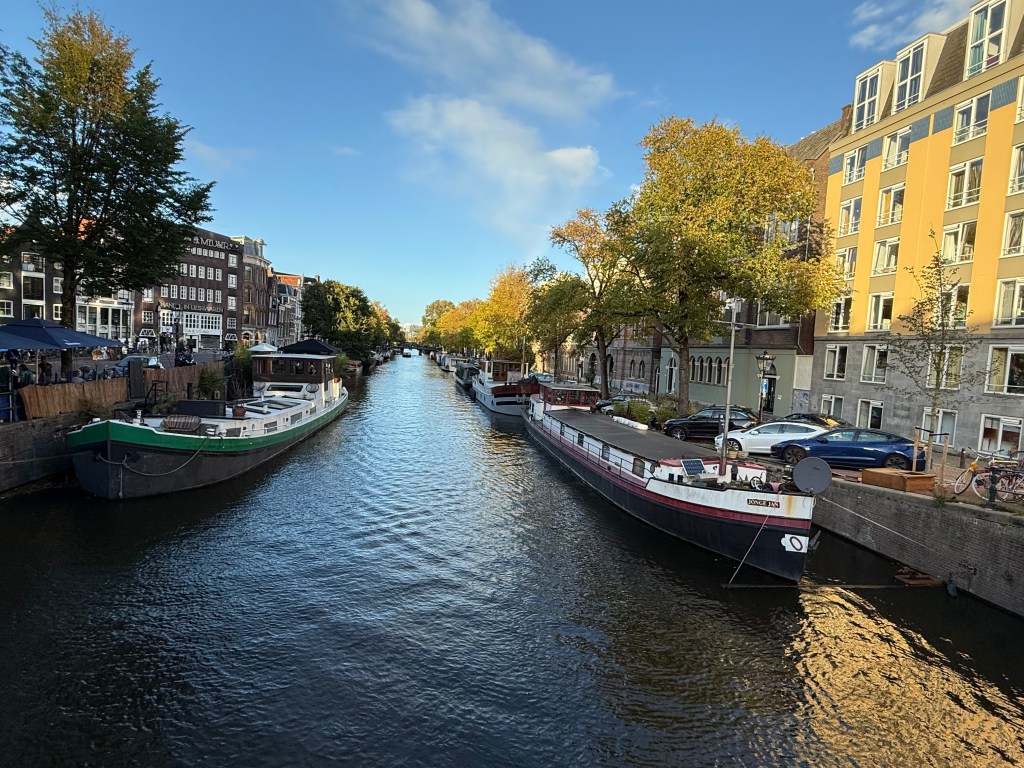

Here are pics of the Central Station and night cruise on the canals.

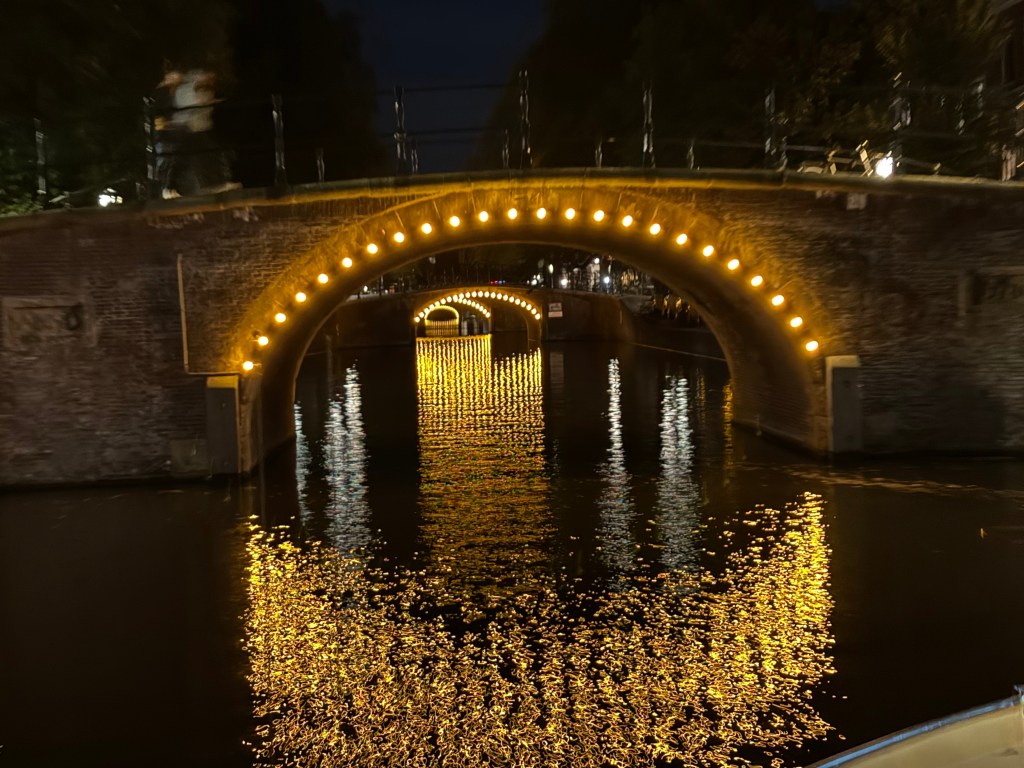
Kinderdijk, The Netherlands
After getting on board and cruising for a night we arrive at Kinderdijk and get a tour of some windmills. Most of the windmills were pumping water up and out of the lower elevation areas to reclaim land that was otherwise unusable. About half of the land area in the Netherlands is below sea level.
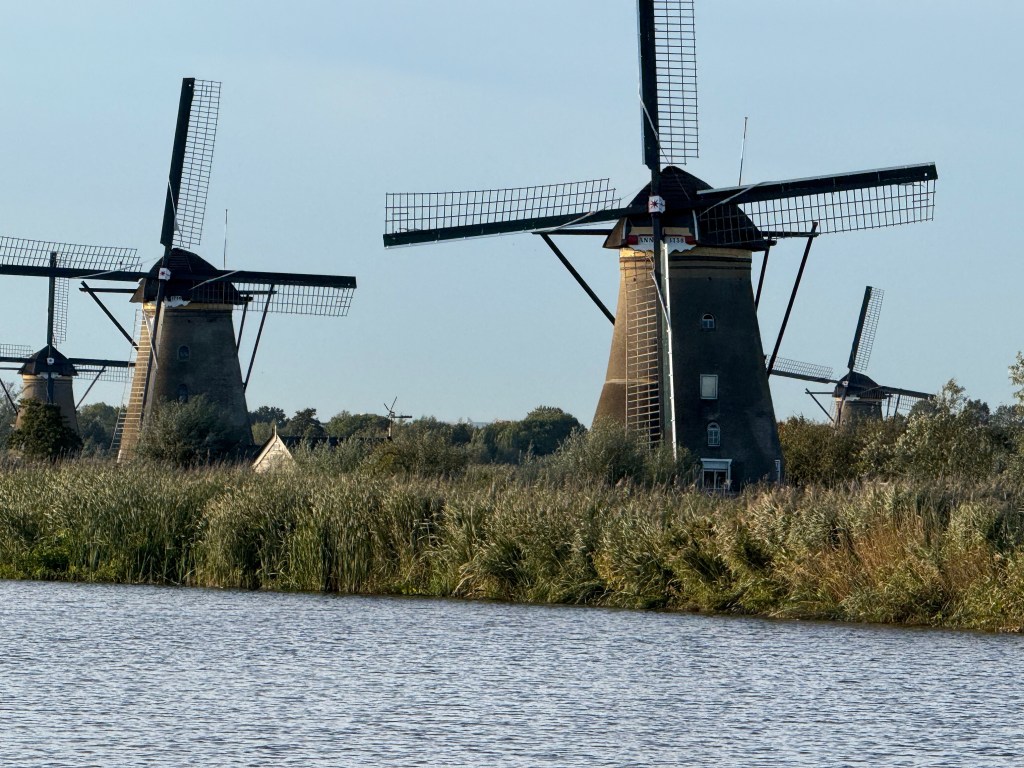
Cologne, Germany
Big city. Our tour guide gave us an entertaining account of Cologne’s history going back to the Roman days when it was established as a “colony” by Claudius who was married to Agrippina the Younger who was born here when her Roman general father Agrippa was stationed here.
The Cologne Cathedral is famous for its twin spires and is the tallest Roman Catholic cathedral in the world. It took about 600 years to complete construction in 1880.


Koblenz, Germany
Koblenz is at the confluence of the Rhine and Moselle rivers. History goes back to Roman times.
Here we were introduced to the brass plaques embedded in the sidewalk to commemorate a particular Jewish person who had lived or worked in that location and died in the holocaust. The program was started in 1992 and there are now about 100,000 of these 4″ square plaques throughout Germany. We saw many of them later in the voyage.

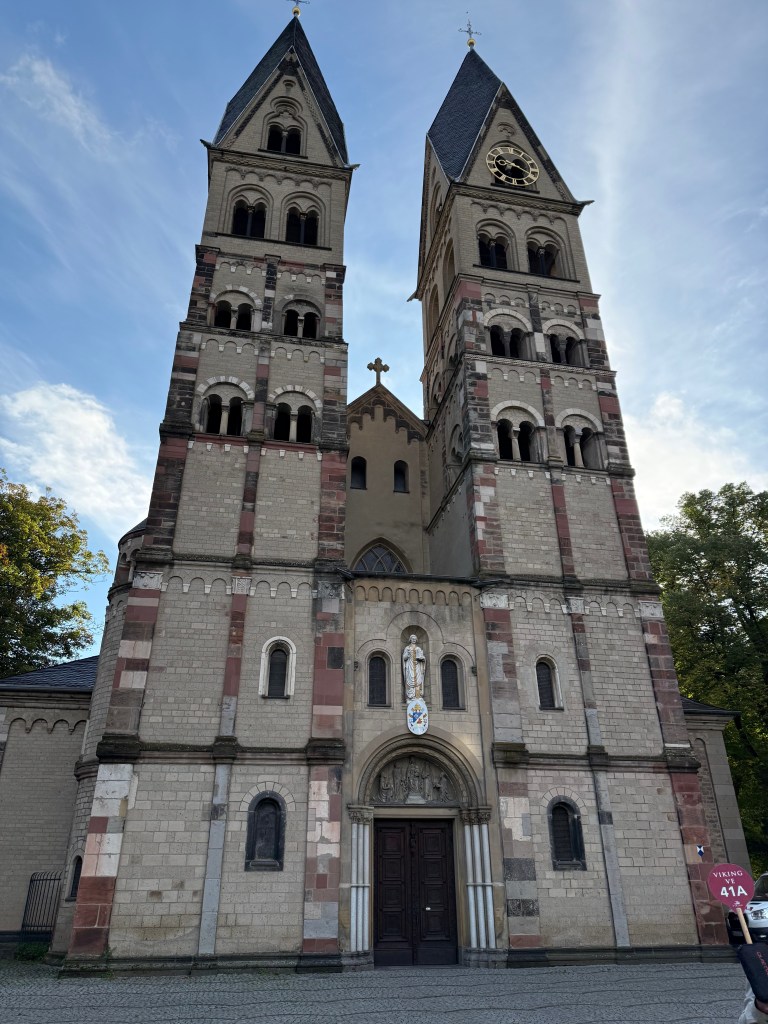

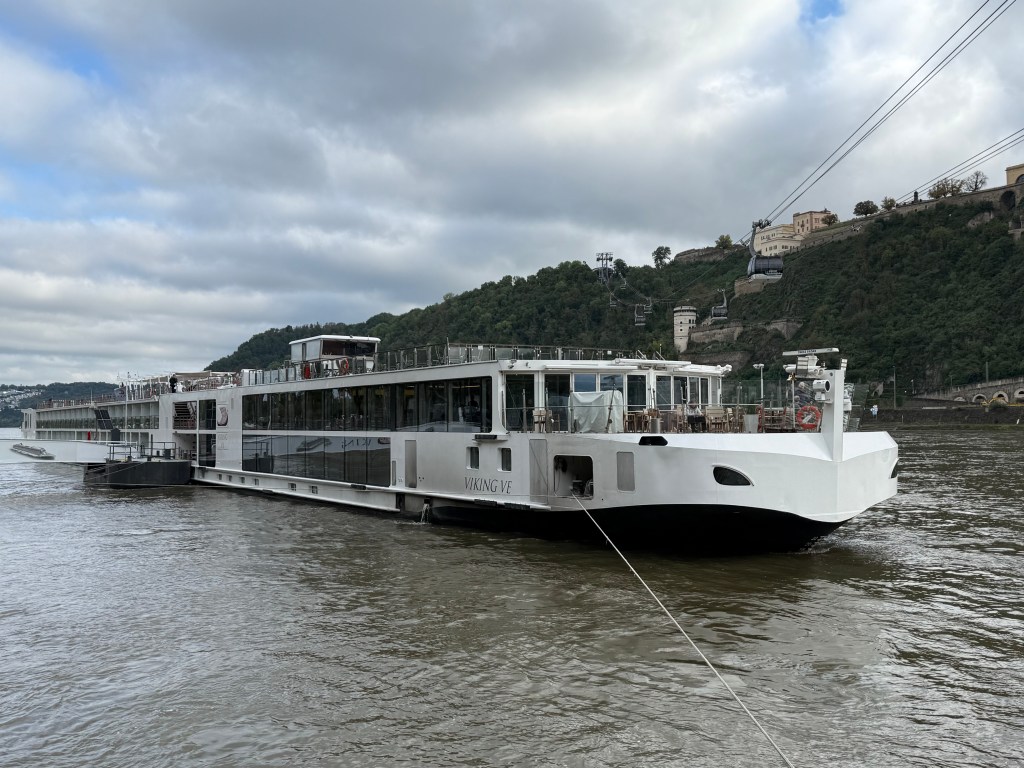
Here’s a pic of our ship. The cable car goes up to a castle on the bluff above the river.
Miltenberg, Bavaria, Germany
We left the Rhine river and are now on the Main river. And we are in the state of Bavaria and will be for the next six days. Bavaria is in the southeast portion of Germany and is the largest state by area in Germany.
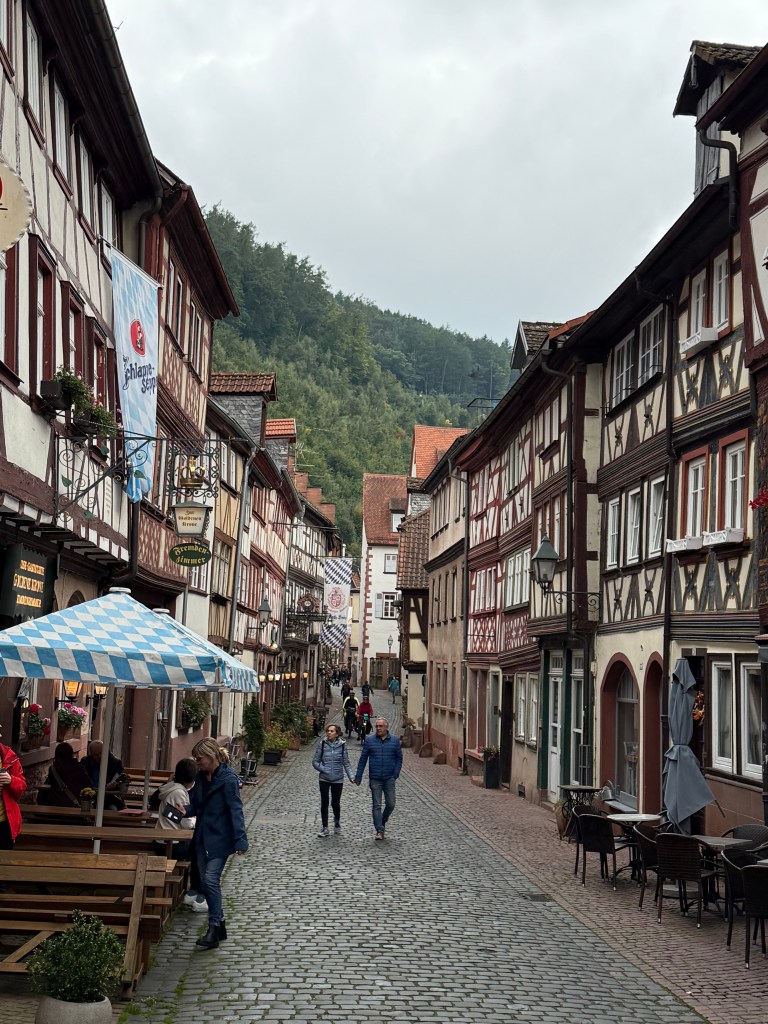
Miltenberg is a small medieval town with cobblestone streets with timber-framed houses and crooked lanes.


Wurzburg
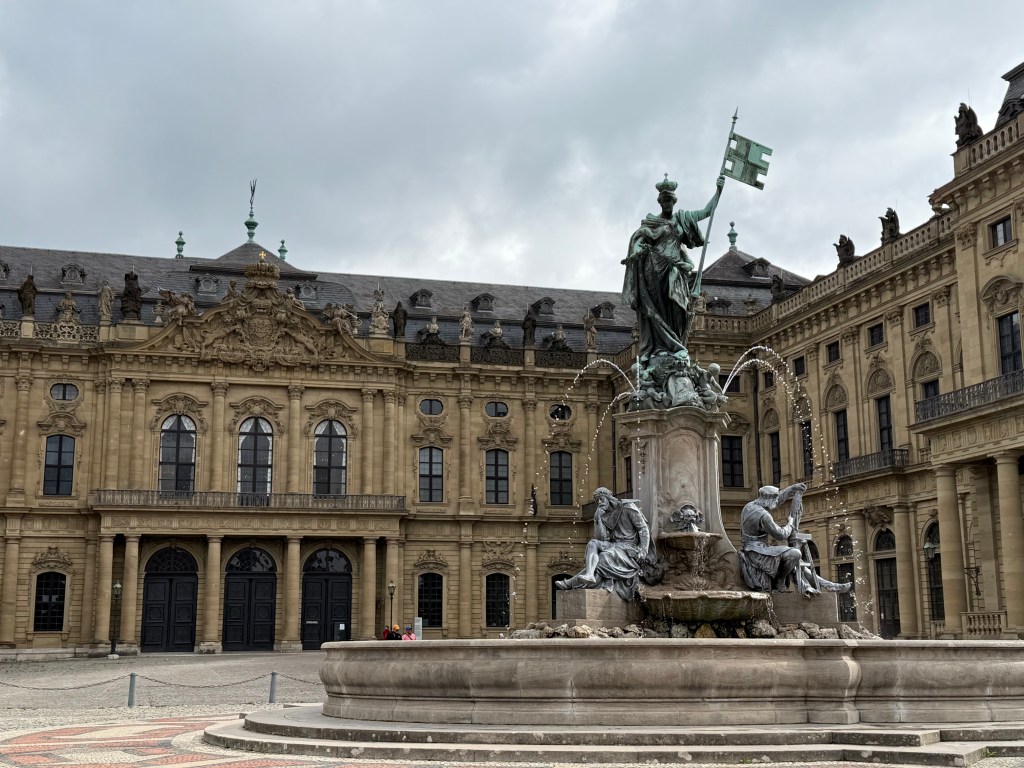
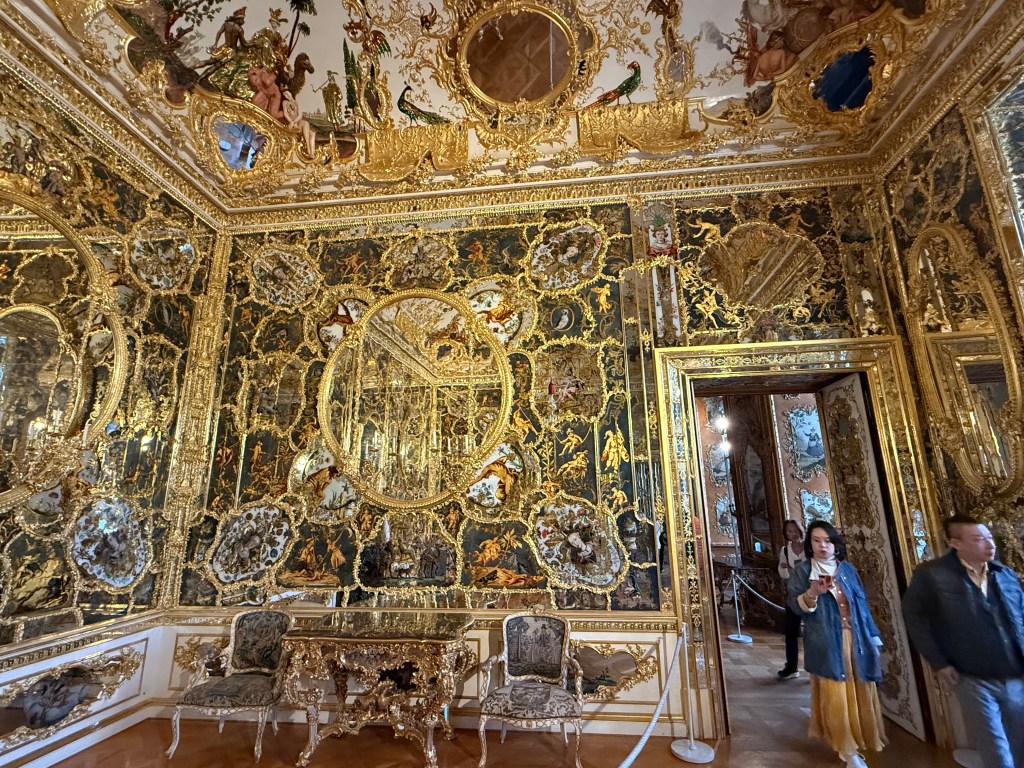
In 1850 Germany was 39 little countries. in 1870 it had been united into one country by Otto von Bismarck. Wurzburg was one of the wealthy separate countries ruled by a “prince-bishop”. We visited the “crowning glory” of Wurzburg – the Bishops Residenz, one of Germany’s finest baroque palaces built between 1720 and 1744.



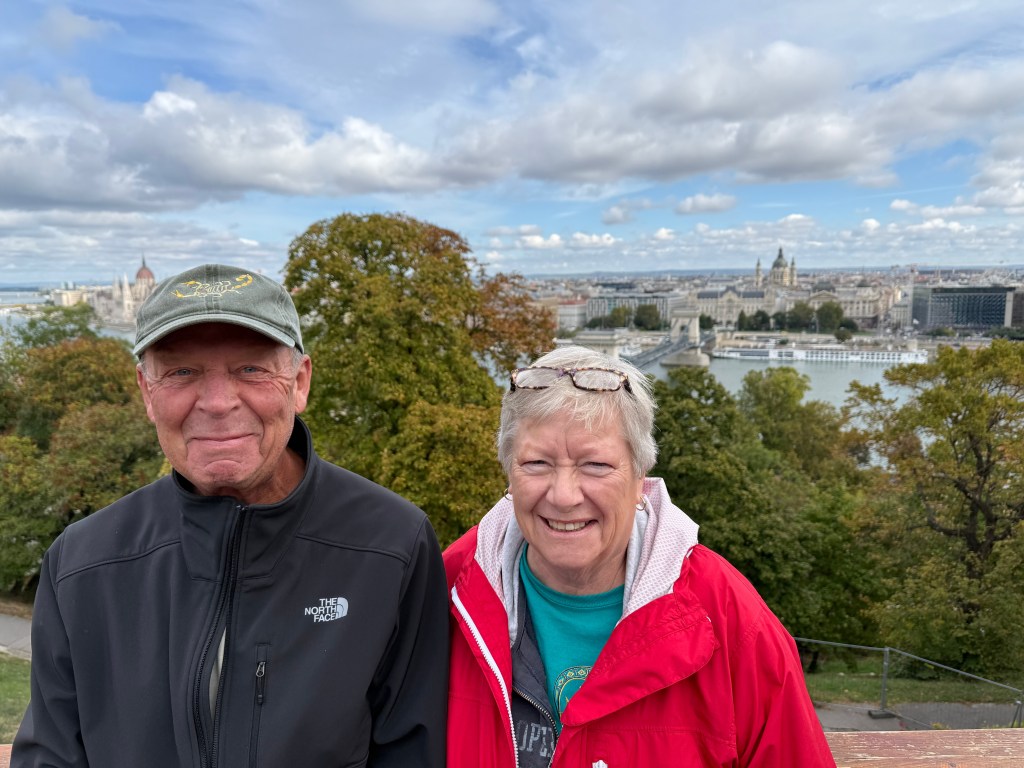
Here’s a pic of our new good friends, Lynn and Duane, from Green Valley, Arizona.

Bamberg
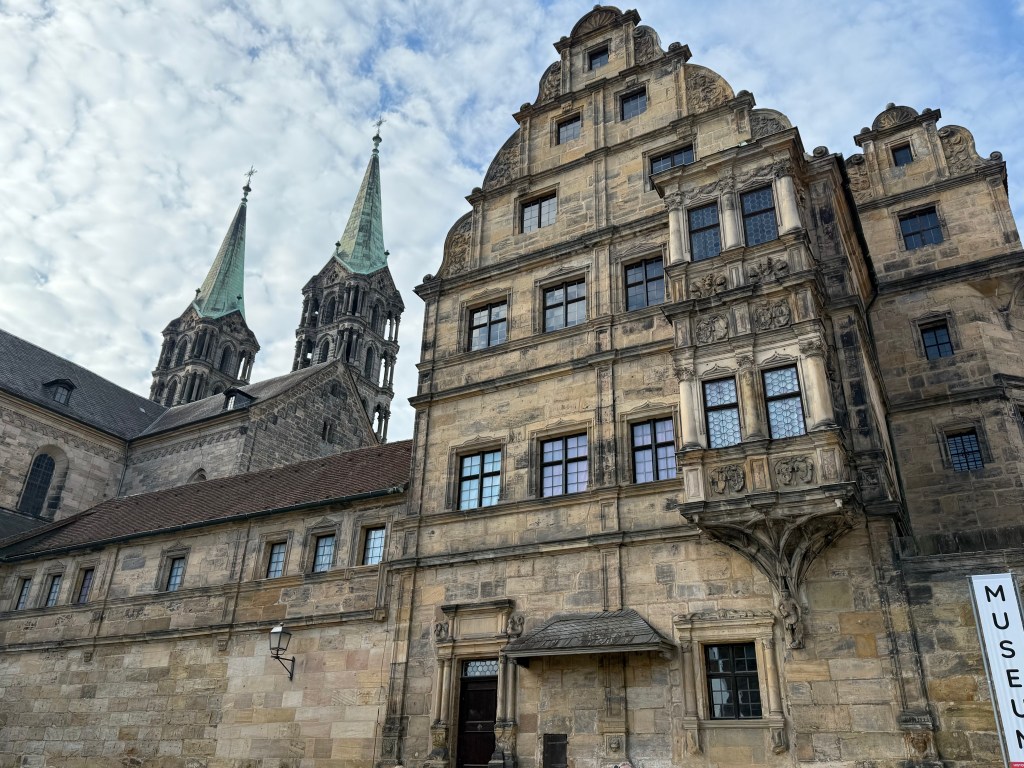
Bamberg was once the center of the Holy Roman Empire. The cathedral that was consecrated in 1012 is the architectural and spiritual center of the city. It is one of the cities not destroyed by allied bombing in WW2 so has many old Romanesque, baroque, and Gothic structures.
Here we transition from the Main river to the Main-Danube canal which was constructed from 1960 to 1992 and is now a significant waterway to connect the North Sea to the Black Sea.

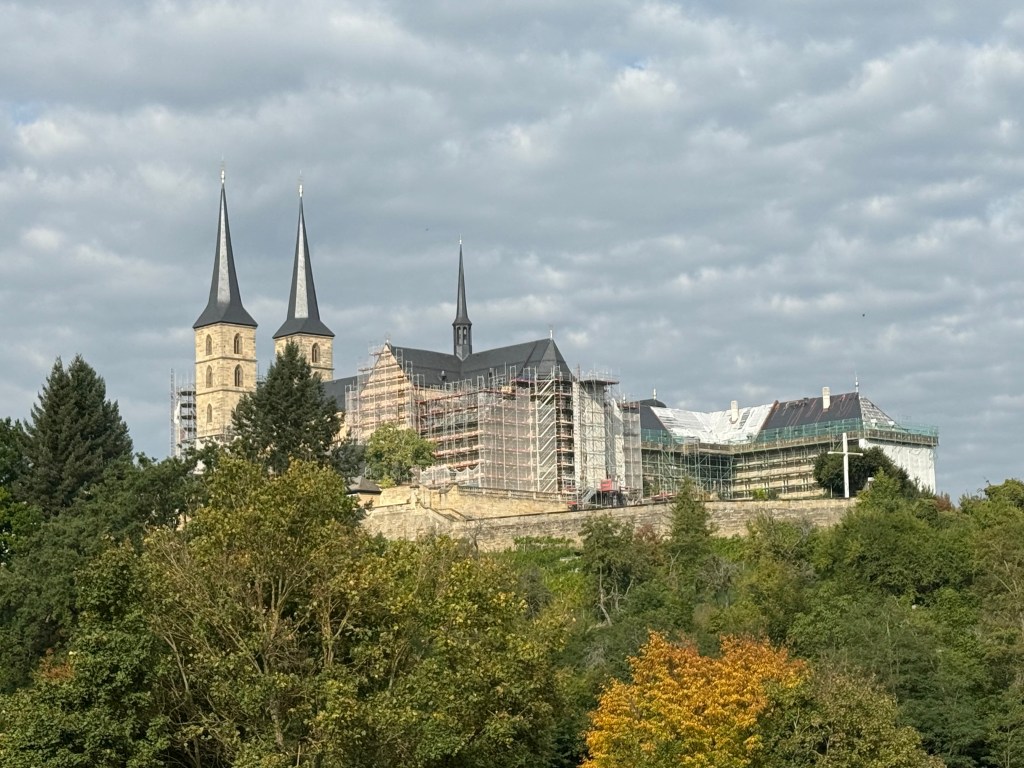
Here’s a big monastery getting some work done
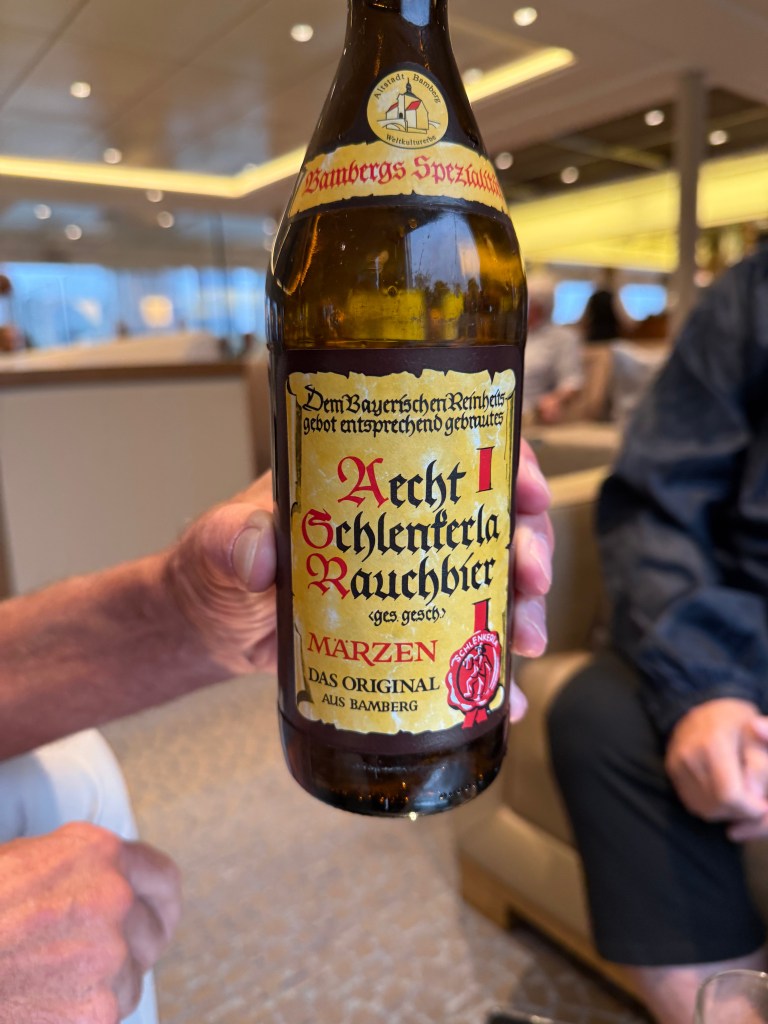
Bamberg is famous for the “black beer” that they make here. It was first brewed as a mistake and has a smoky flavor, but people liked it so it now is popular. Our friend Duane bought a bottle for us to share at cocktail hour on the ship and we gave it a thumbs up,
Nuremberg
Nuremberg is the second biggest city in Bavaria. Munich is the biggest. We know it from the Nazi trials that happened after WW2 where 12 guys were on trial and about were given a death sentence. We also drove by the Nazi Party Rally Grounds where Hitler held annual gatherings of about 500,000 supporters and spoke from a big platform to the cheering crowds.
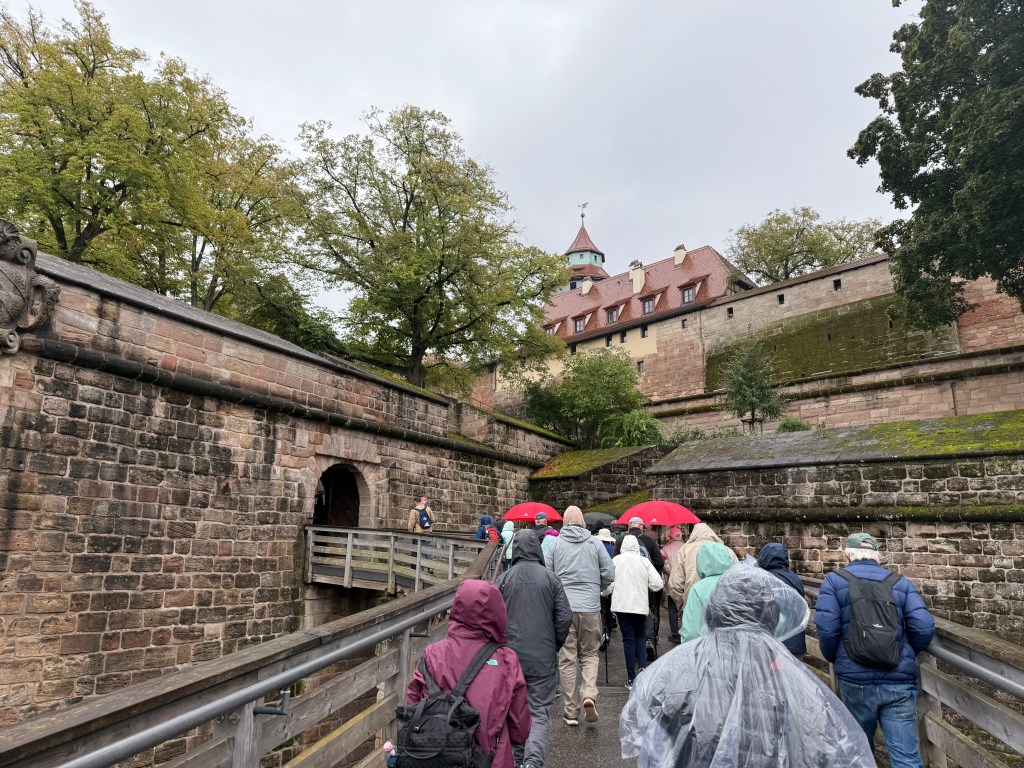
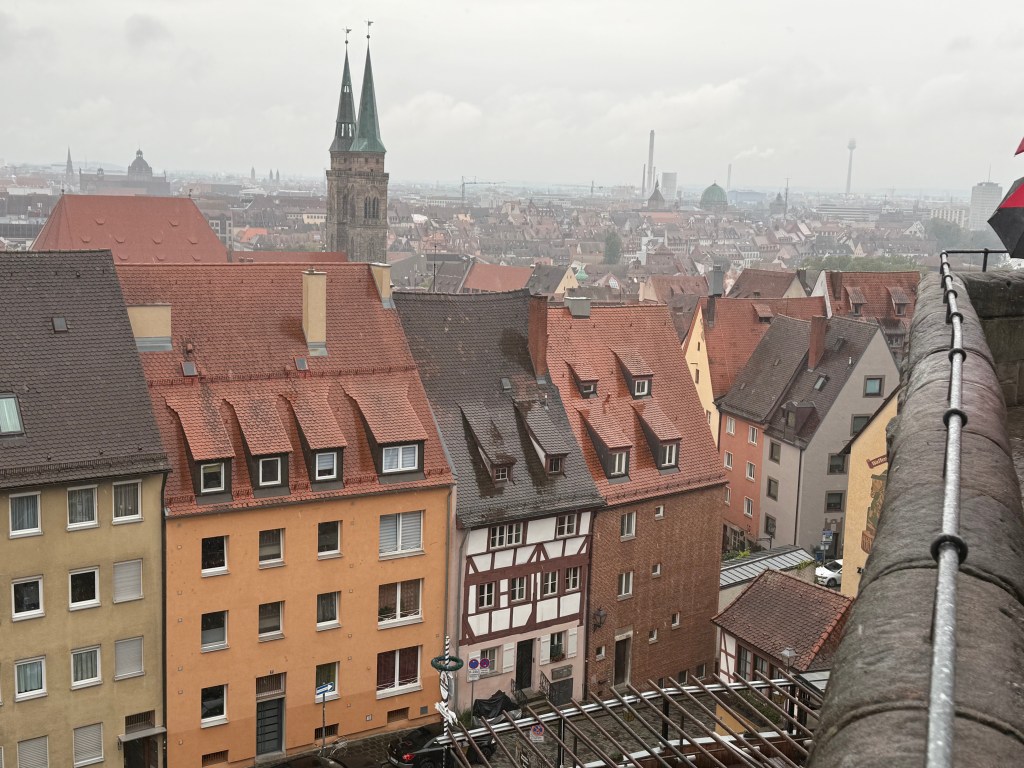
We toured the Imperial Castle of Nuremberg with many of the watchtowers and much of the old city wall open for touring after significant rebuilding efforts after the WW2 bombing mostly flattened much of the city.



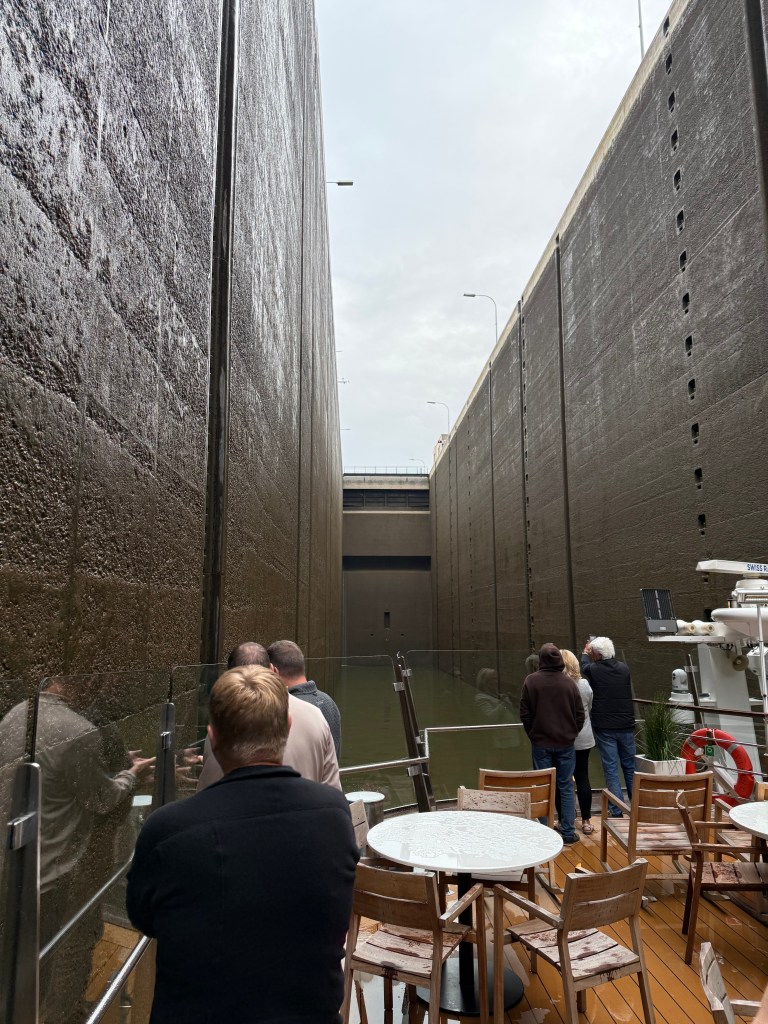
We went through about 67 locks in the course of the trip. Here’s a pic as we entered a lock with about 80′ of lift as we worked our way up and over the “continental divide” and started our downhill part of the trip
Regensburg
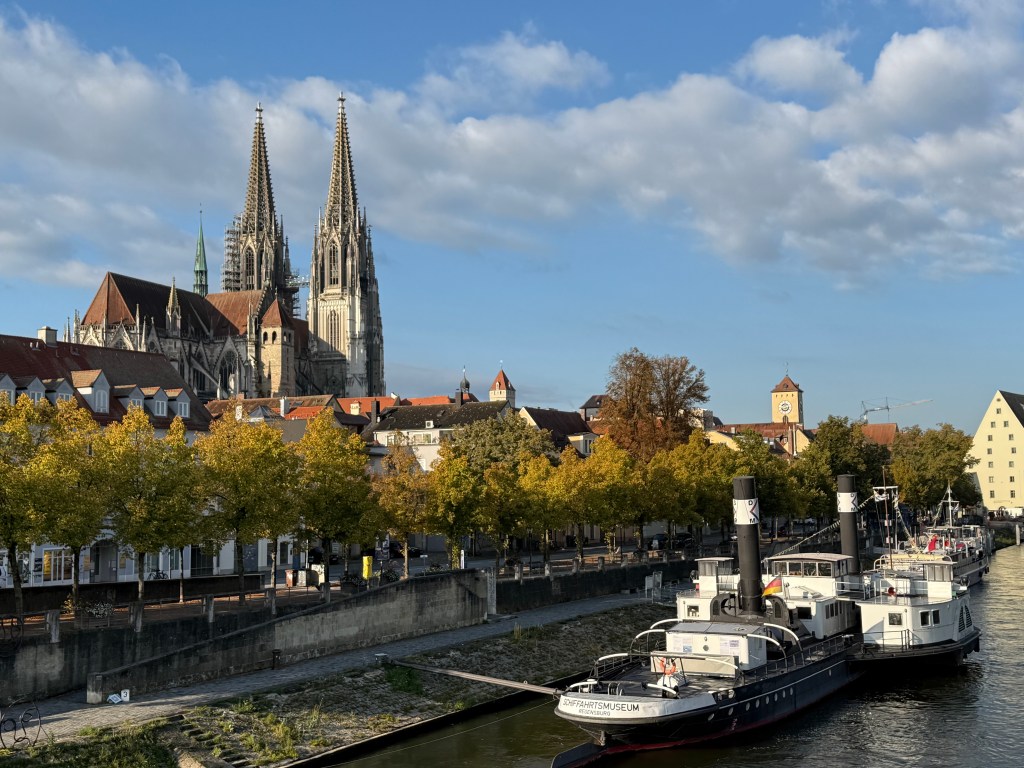
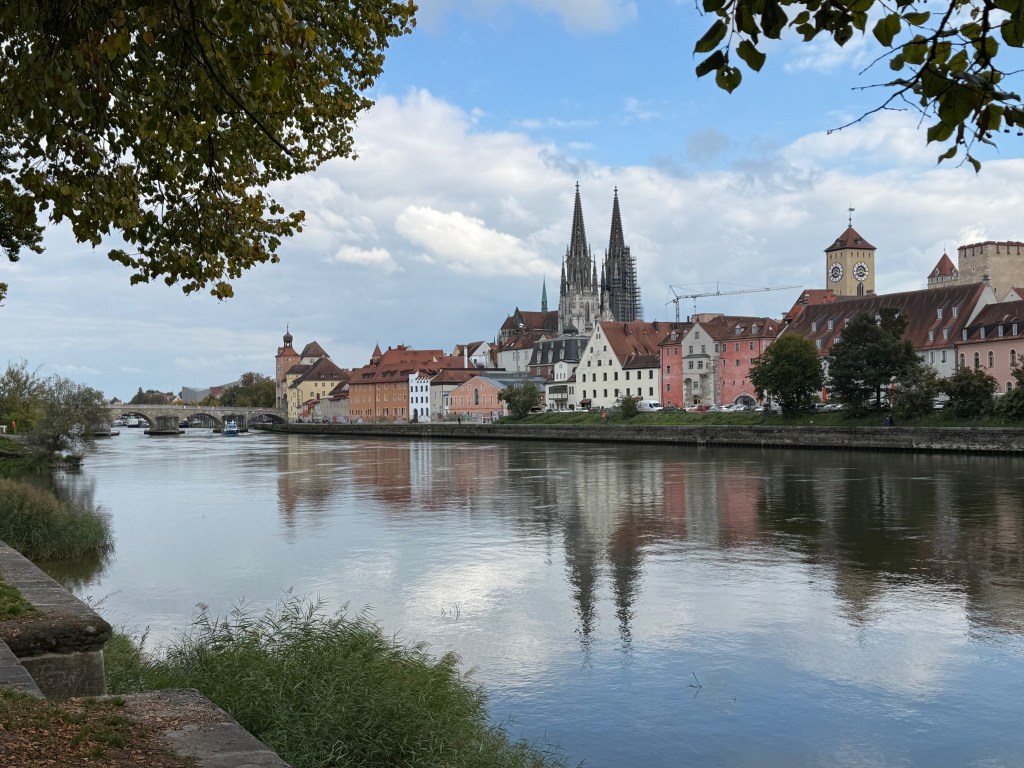
At Regensburg we finally make it to the Danube river. This is another well=preserved medieval town. The Old Stone Bridge, constructed in the 12th century, is a masterpiece of medieval engineering with its 16 arches.

St Peter’s Cathedral has existed since 700 AD but was rebuilt after a fire into the high Gothic-style building completed in 1320.

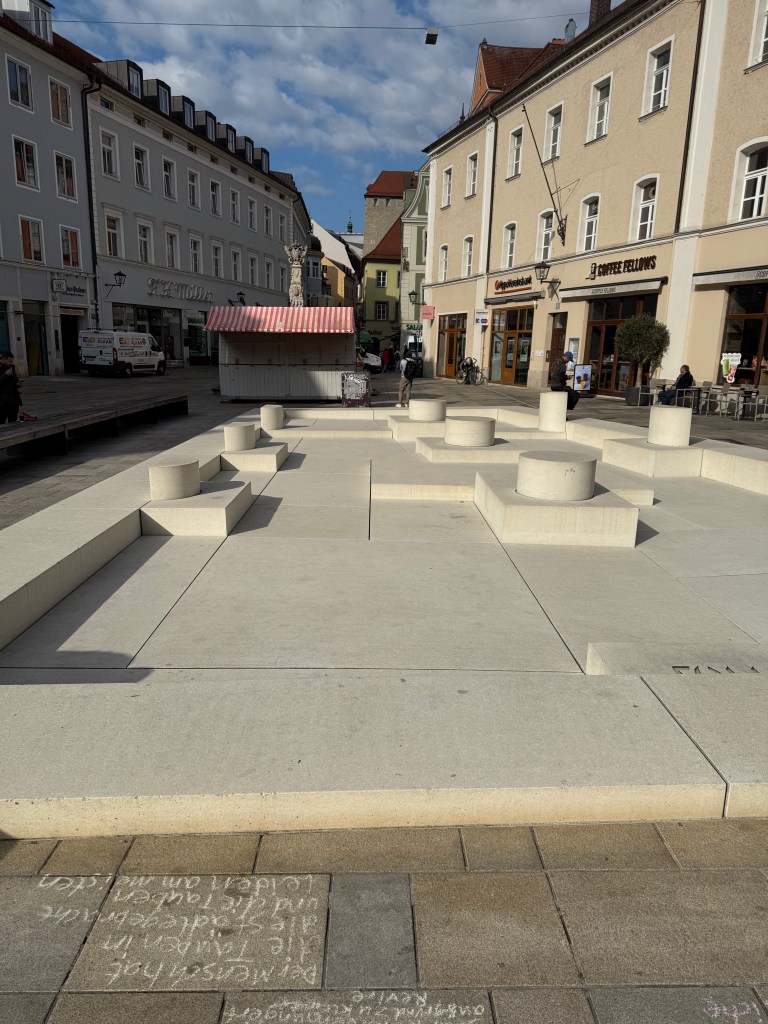
The Jewish story was an element of much of our tour through Germany. Here is a park memorial with recreations of the foundations for a synagogue that was demolished in the course of the holocaust.
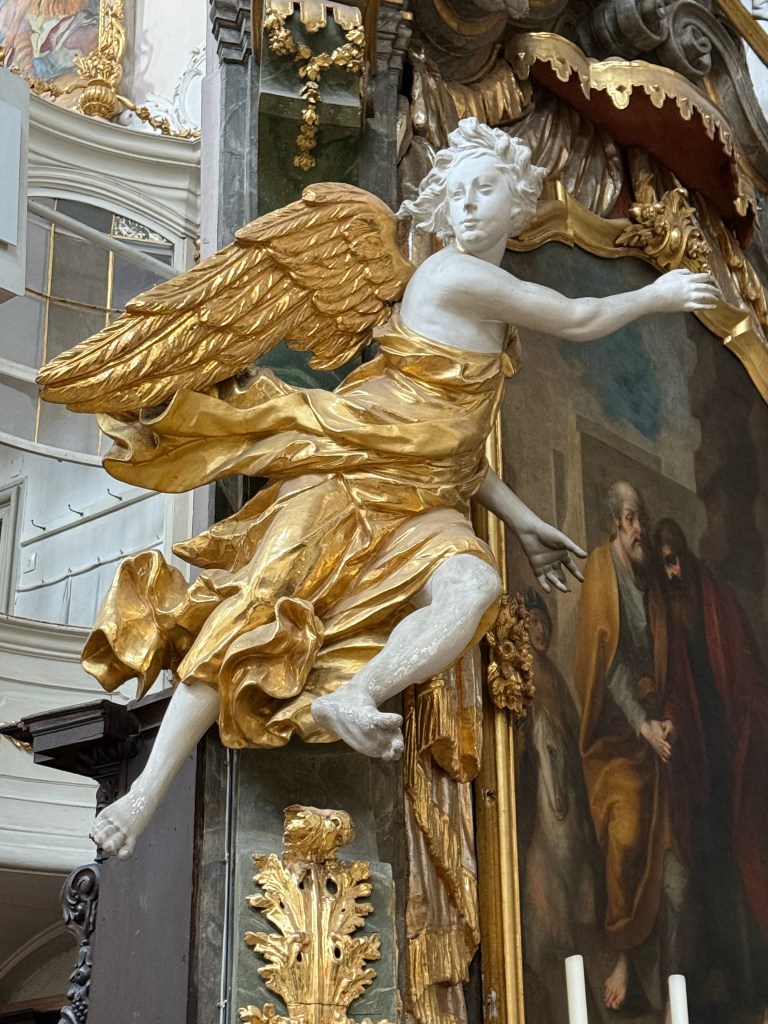
I took an afternoon walk through town and came upon this baroque church that was off the beaten path. Kind of a “Wow” moment.


Passau
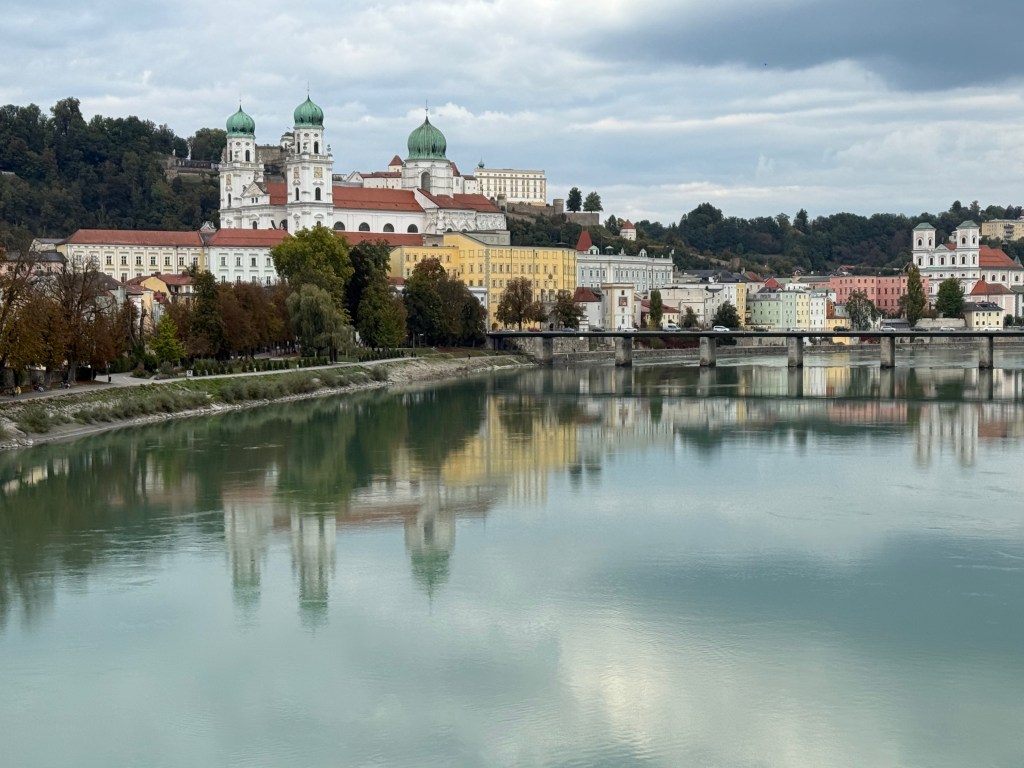
This is our last stop in Germany. Passau is at the confluence of three rivers, the Danube, Inn and Ilz. The Danube is the border between Germany and Austria for about 50 miles downstream of Passau. Founded by the Celts more than 2000 years ago and one of Bavaria’s oldest cities.
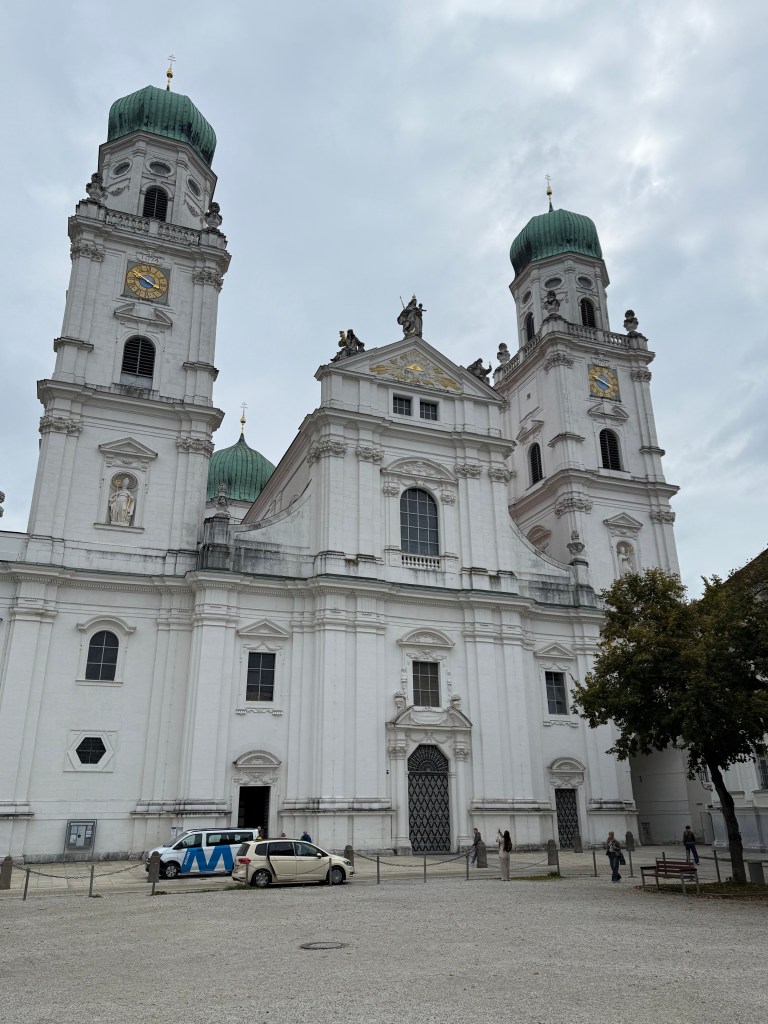
Magnificent baroque St Stephens’s Cathedral was rebuilt in late 1600’s after big fire swept through Passau in 1662. It has the largest pipe organ outside the US.

Here’s a pic of City Hall which has marks on the wall indicating the elevation of the floods in the course of history. The marks are to the right of the door and go about 2,5 times as high as the people.

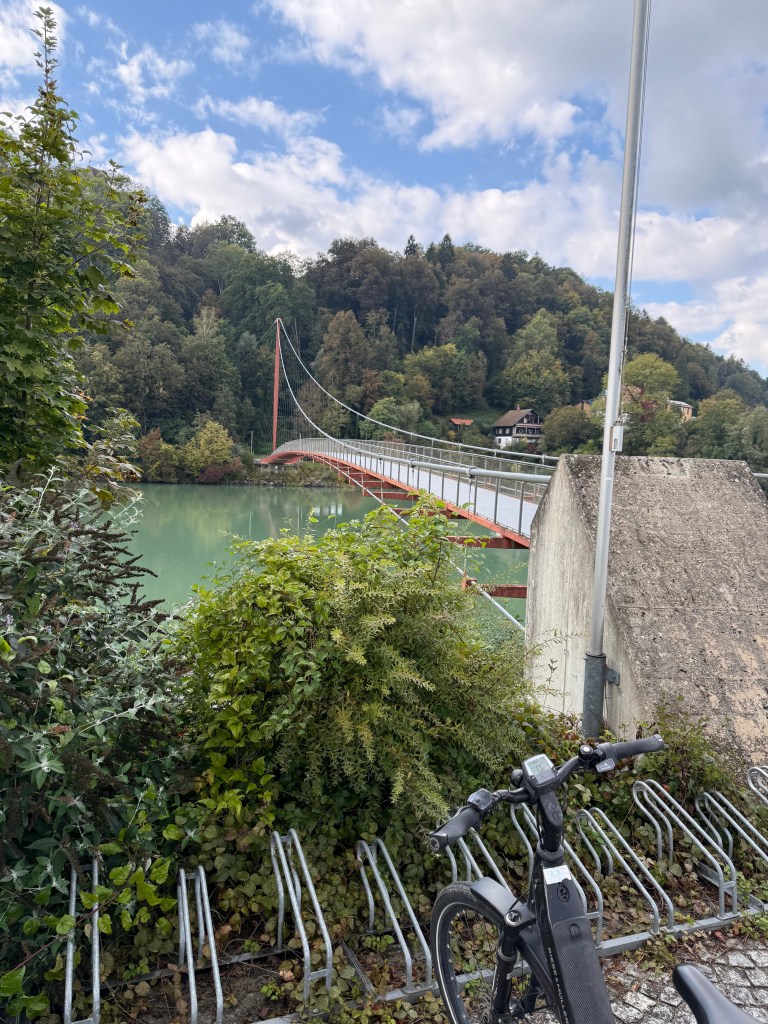
I went for an E-bike ride up along the Inn river.
Austria
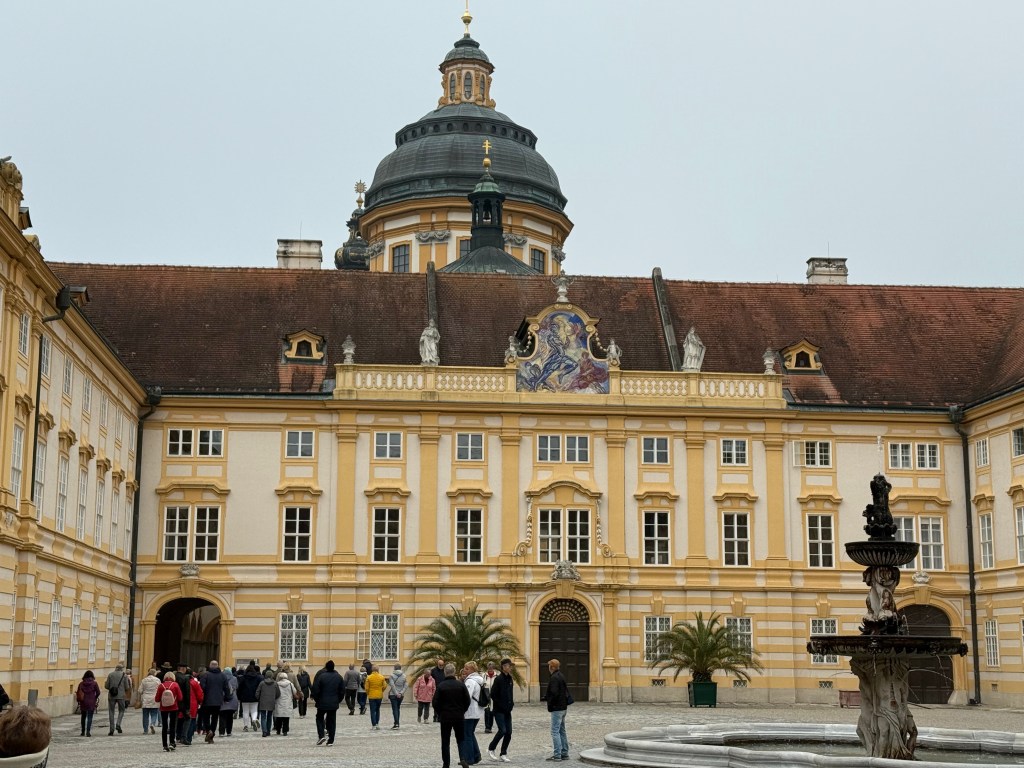
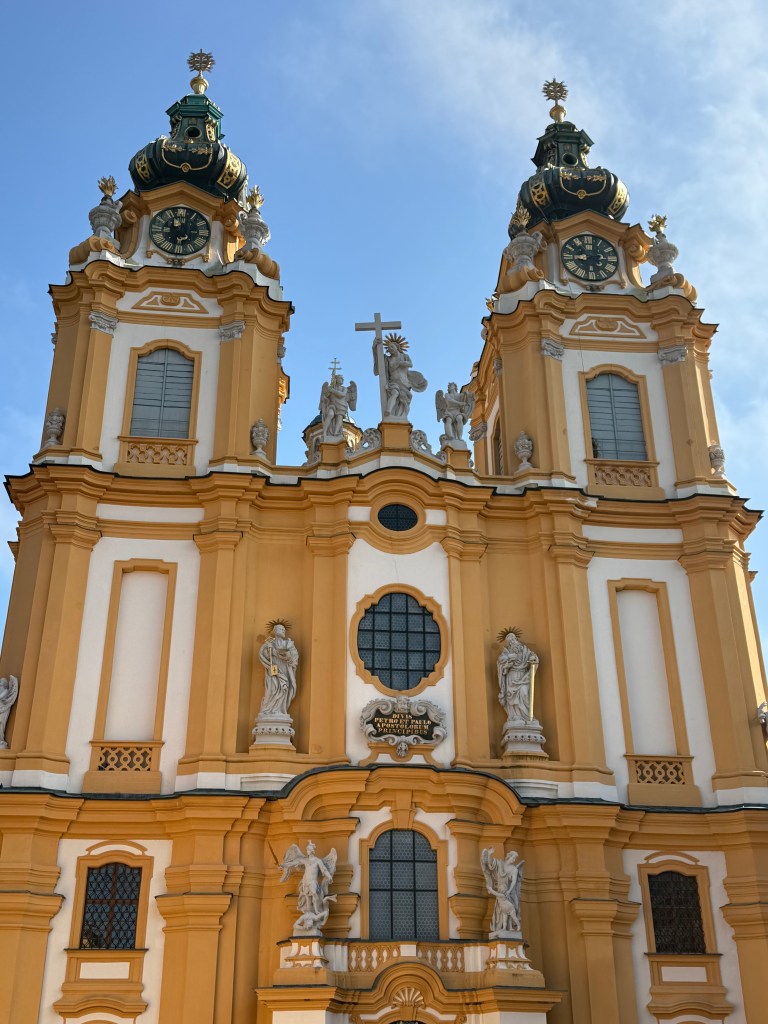
Our first stop in Austria was Melk where we toured the Melk Abbey up on a hill beside the town.
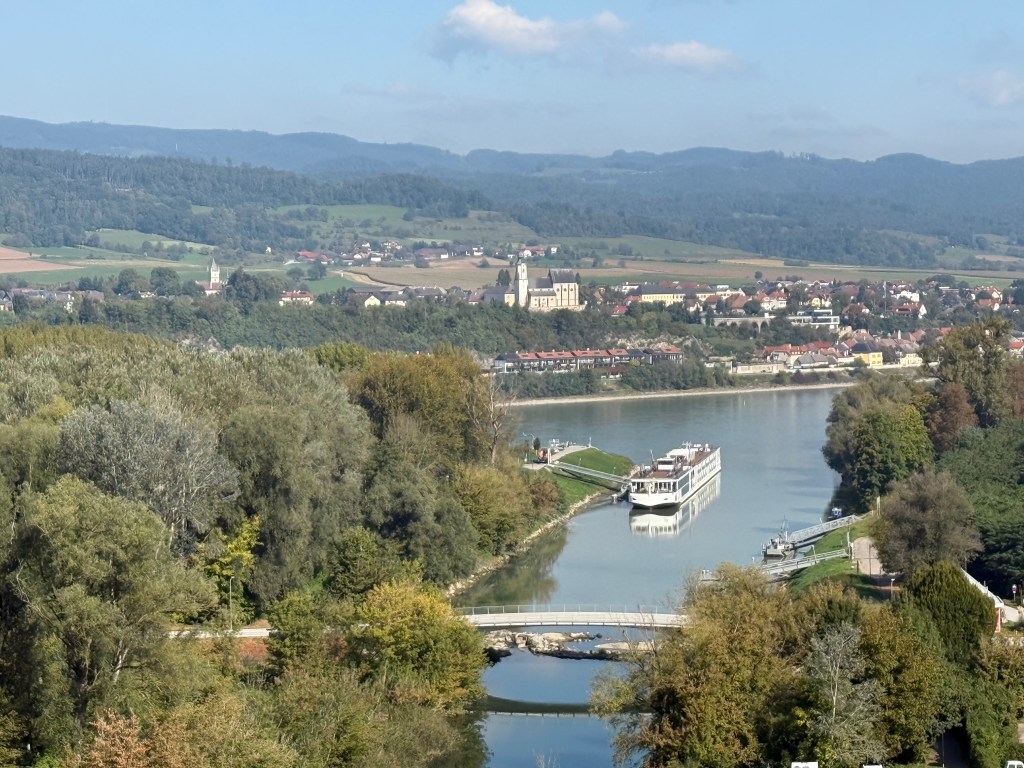
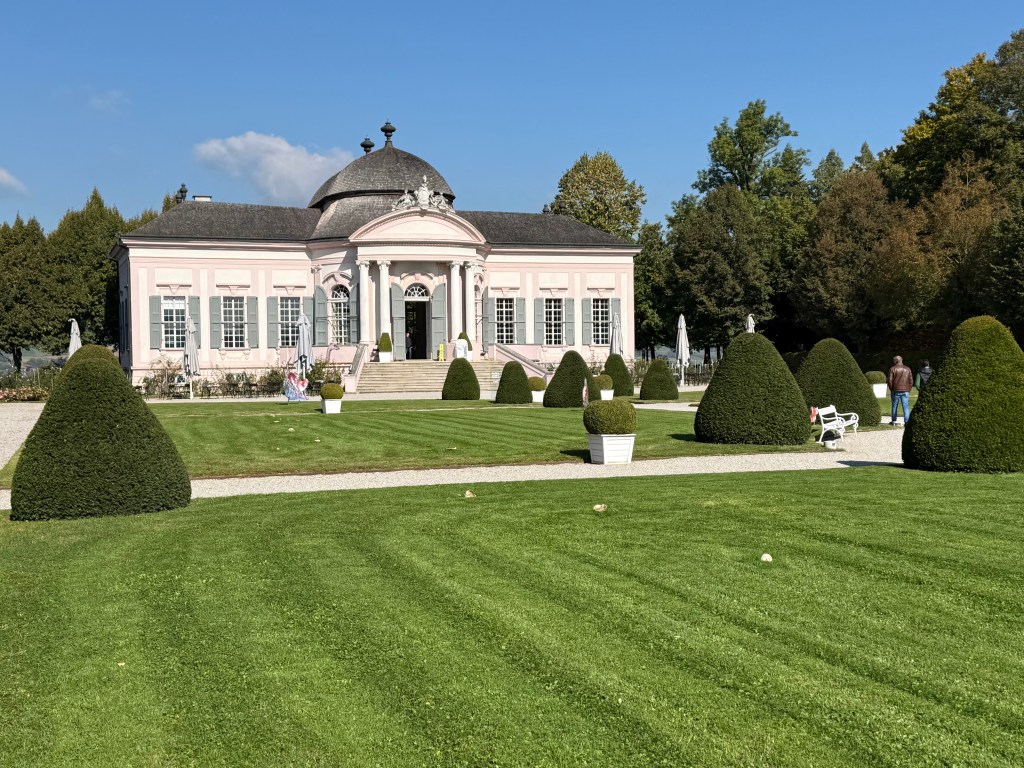

We had a nice afternoon cruise down the river with vineyards and small towns along the way as well as a few castles built up on the high ground.

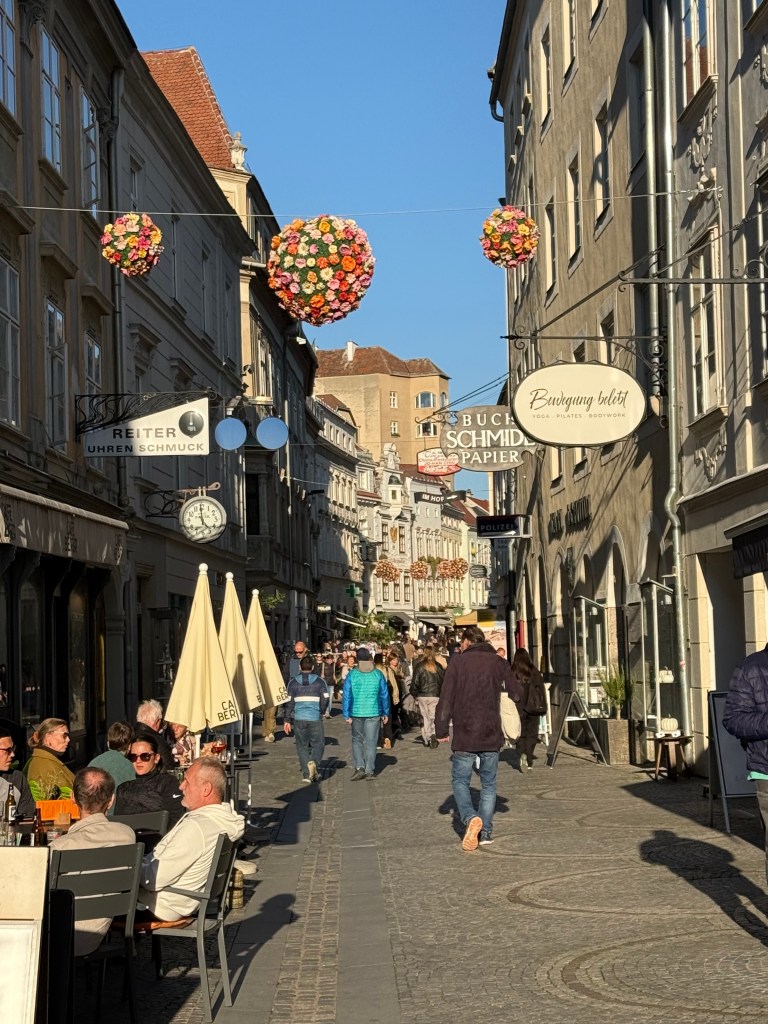
We had an afternoon stop in Krems, another small town with narrow pedestrian streets which make for a great afternoon walk.
Vienna
The big city and center for many years of the Austria-Hapsburg Empire. Mozart, Strauss and Maria Theresa are big names here.
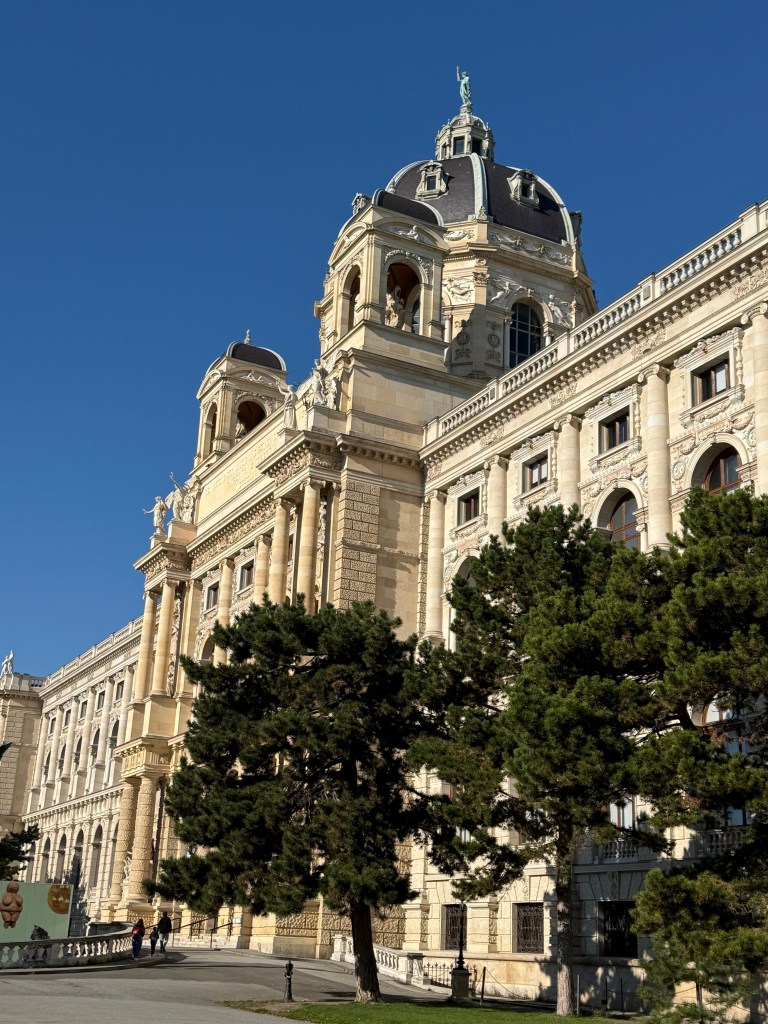
Here’s Maria Theresa Place.
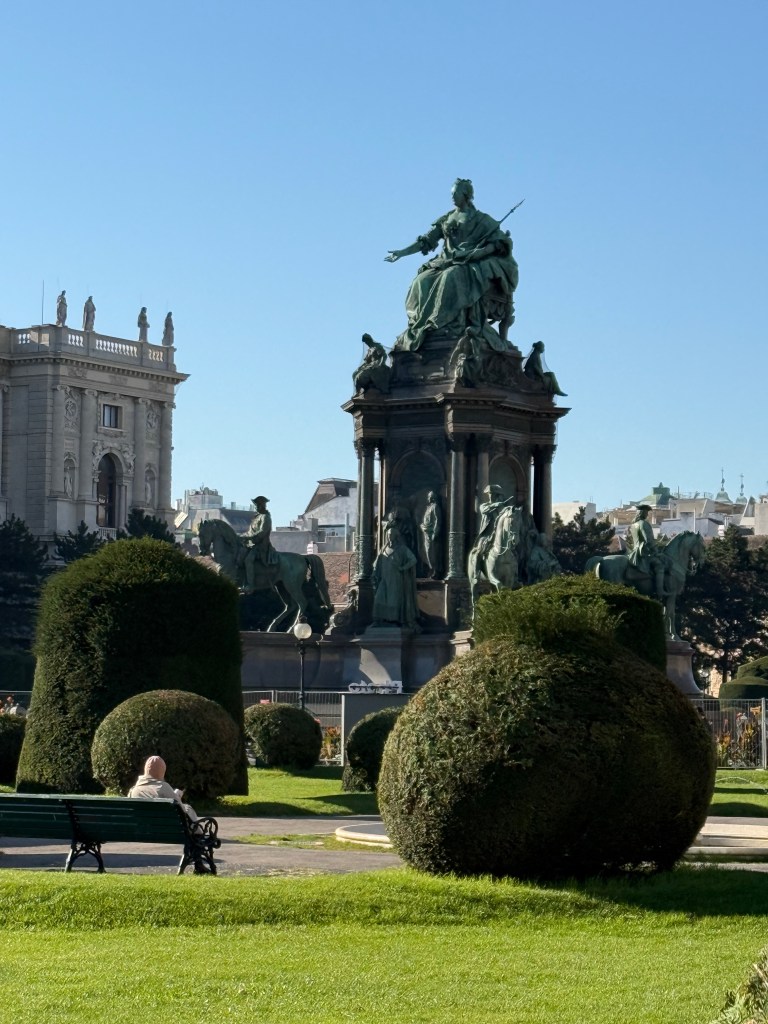
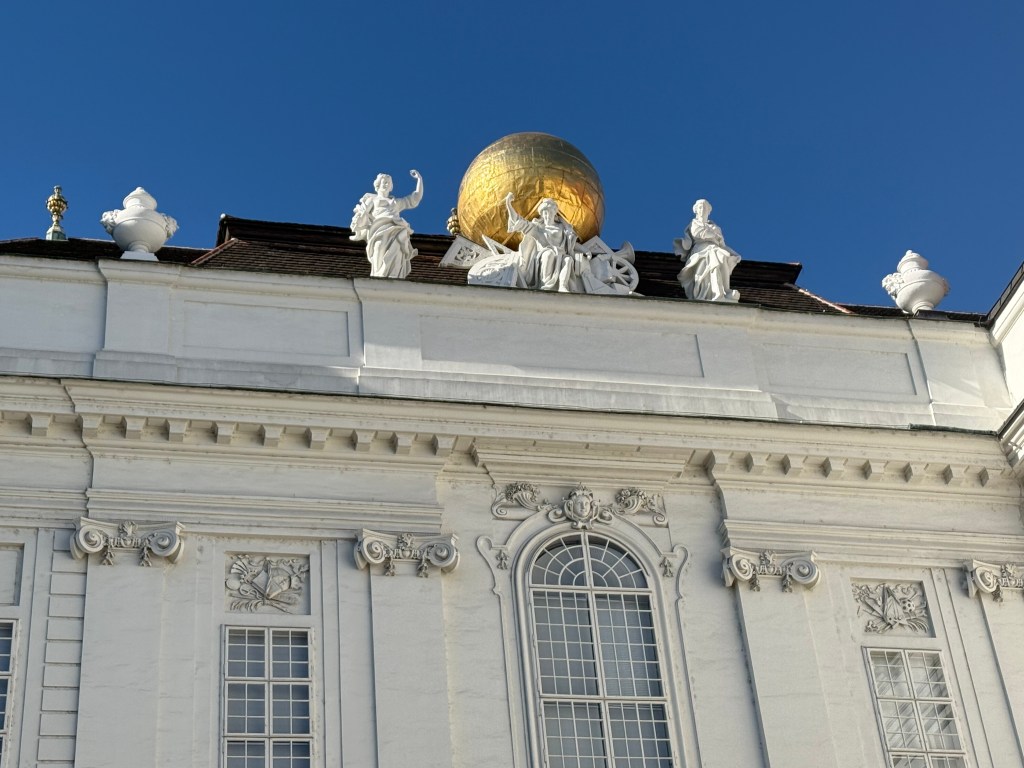
This guy picked on the wrong gal I guess
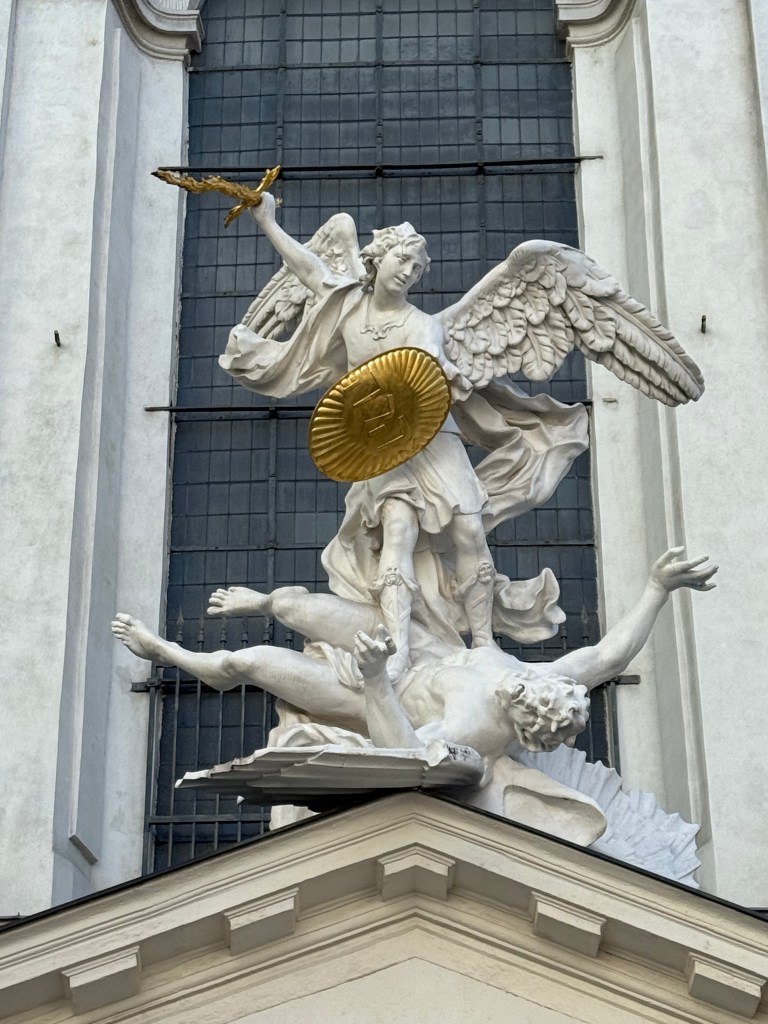
Here’s another St Stephan’s Cathedral

Schonbrunn Palace
This started as a summer hunting lodge for the royals back in 1569 but was enlarged from 1740 to 1750 to its present palatial form by Empress Maria Theresa.

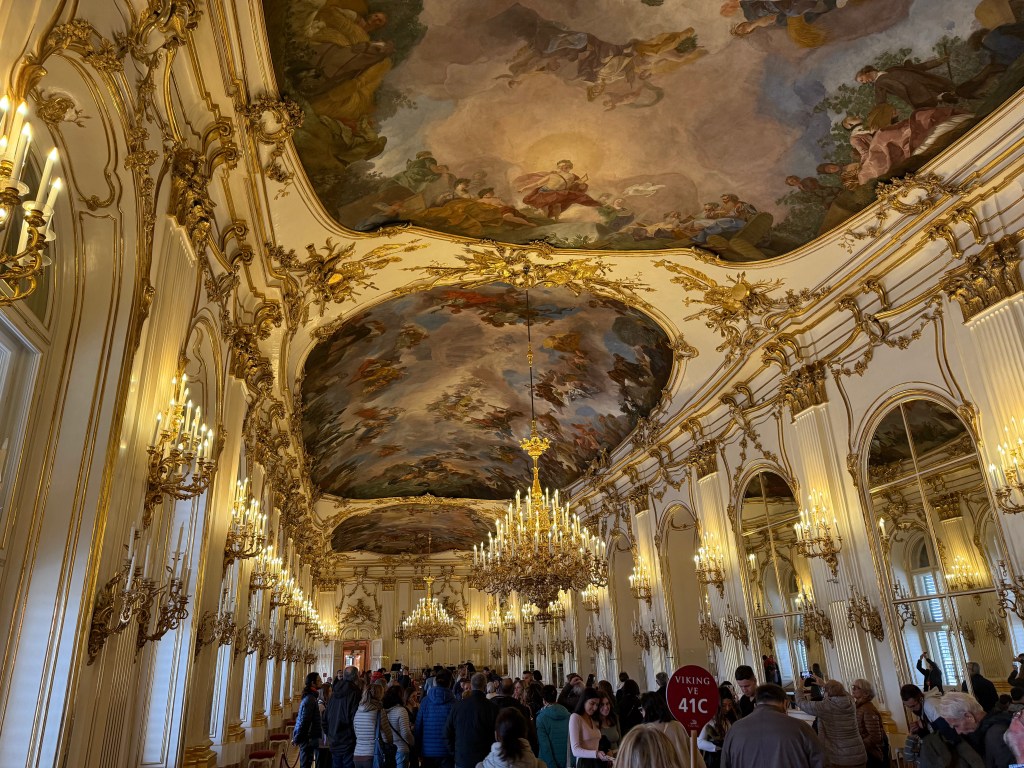

President Kennedy met with Khrushchev here in 1961. Kennedy refused to remove our troops from West Berlin per the Khrushchev request.
We learn that Austria is a “neutral” country and not aligned with the western powers or Russia. This is in their constitution and is based on the agreement between Eisenhower and Khruschev at the Geneva Summit in 1955 which ended the four-power occupation of Austria following WW2.
Hungary
We finally make it to Budapest, our last stop. We learn that their foundation story as a nation goes back about 1000 years to about 900 AD when the Magyars took control of the area. Our guide told us that Hungary has been the loser in all of the significant military engagements it has had in its history so not wise to side with them in a conflict. They were grudgingly under control of the Austrians in the Austria-Hungary empire days.
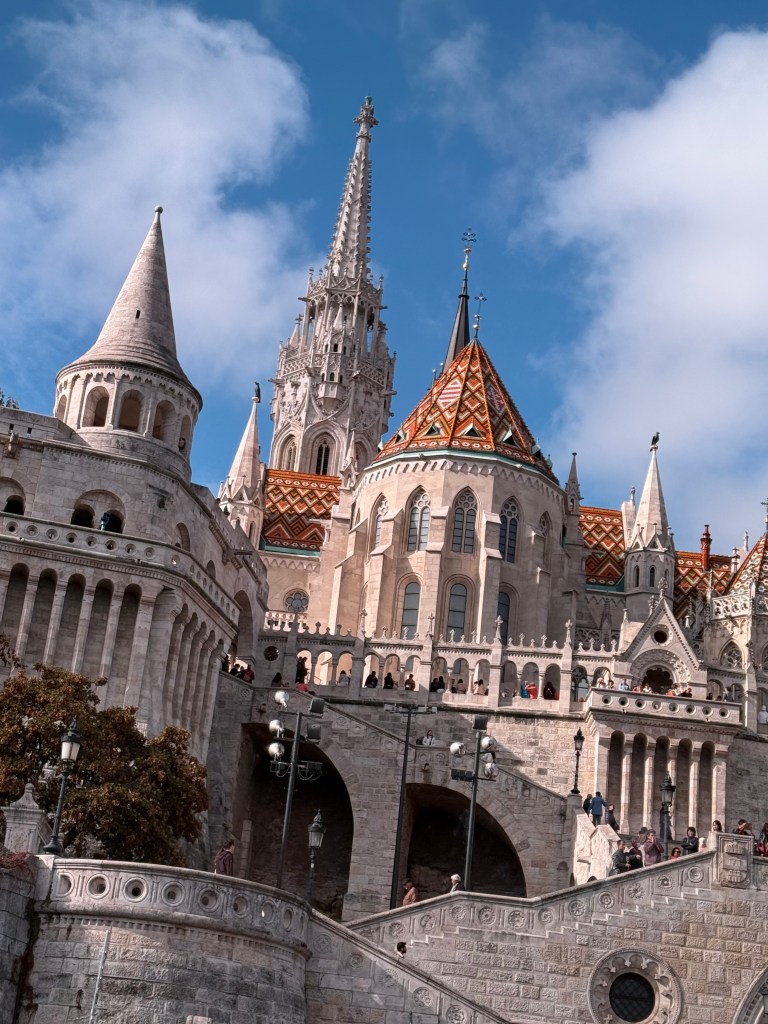
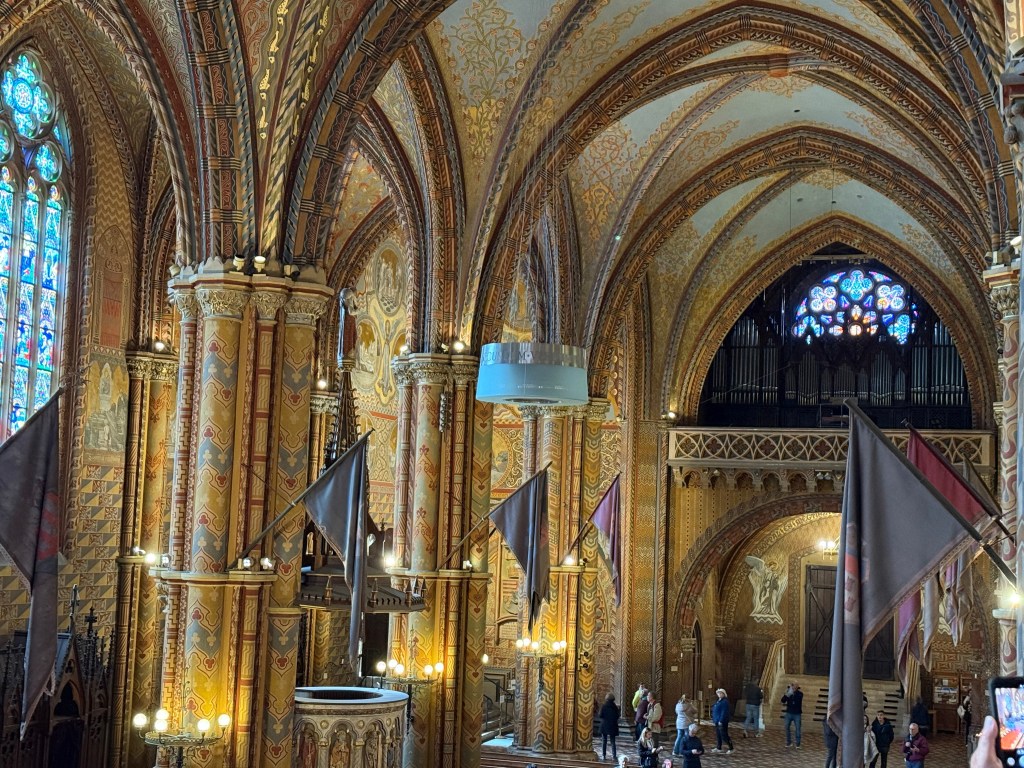
Buda and Pest used to be separate cities on either side of the Danube. Pest is on the north side and is the main modern part of the city. Buda is on the south side and has a big castle and cathedral on the top of a hill.


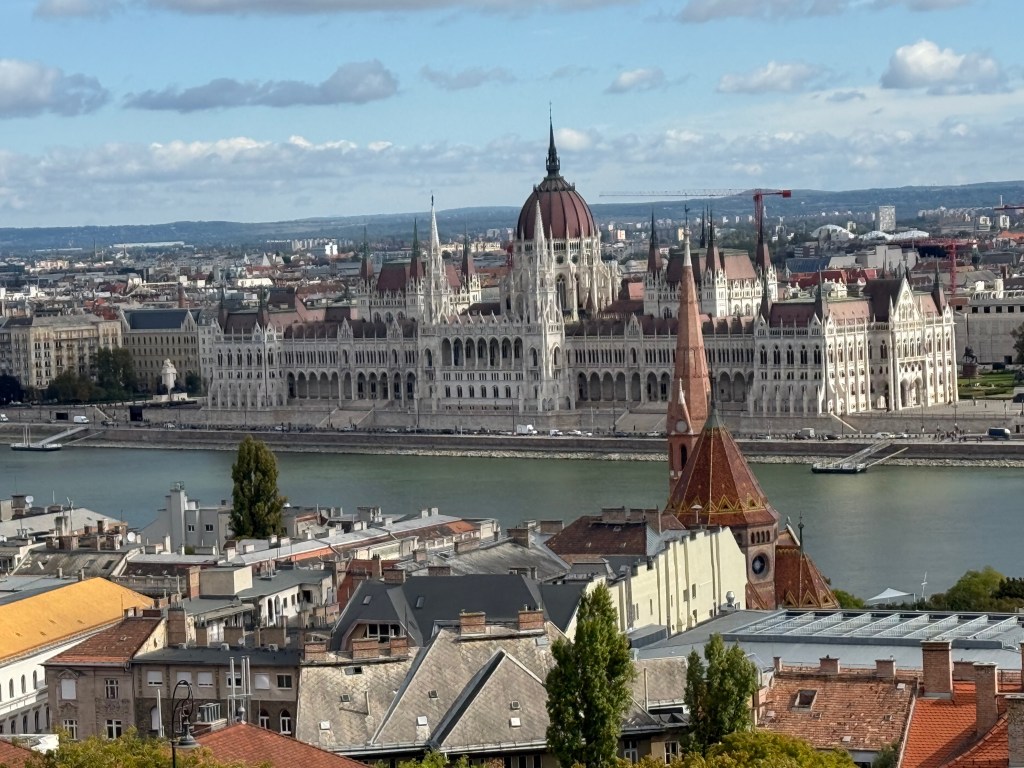
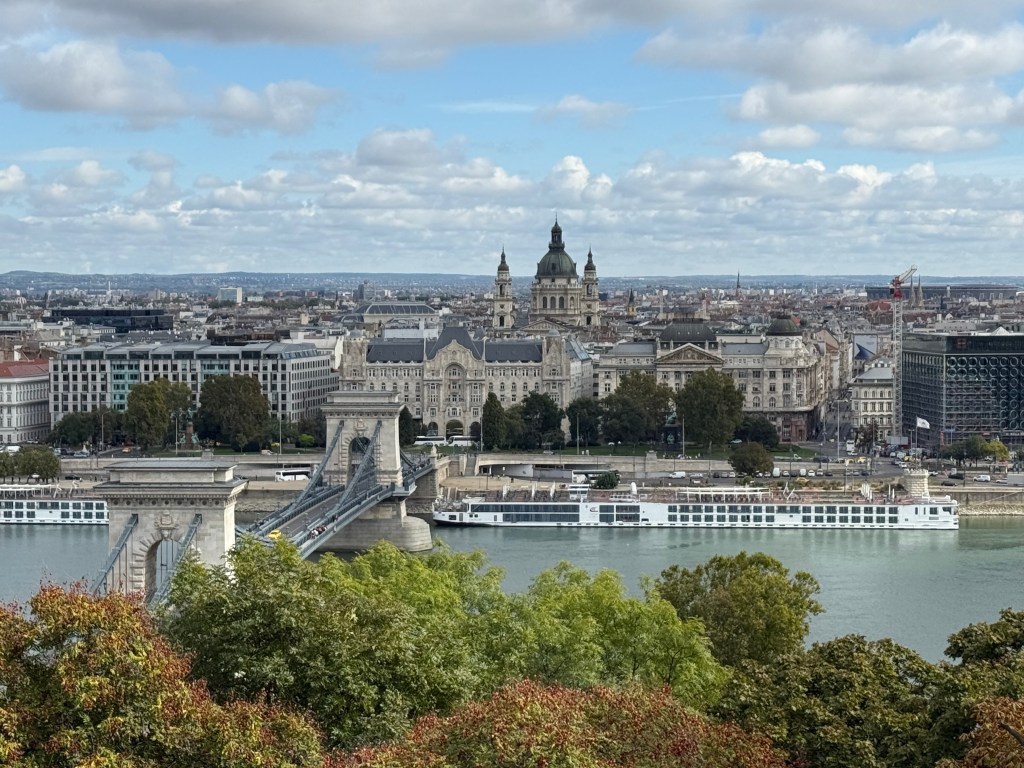
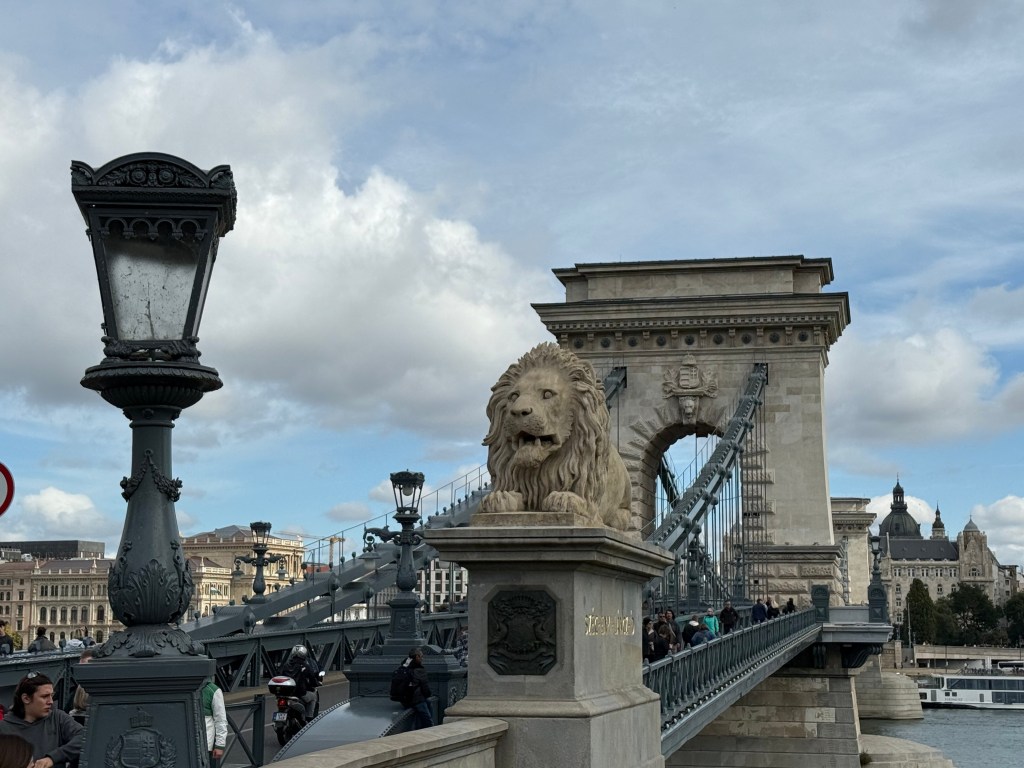
Here’s our ship and the Chain Bridge over the Danube River
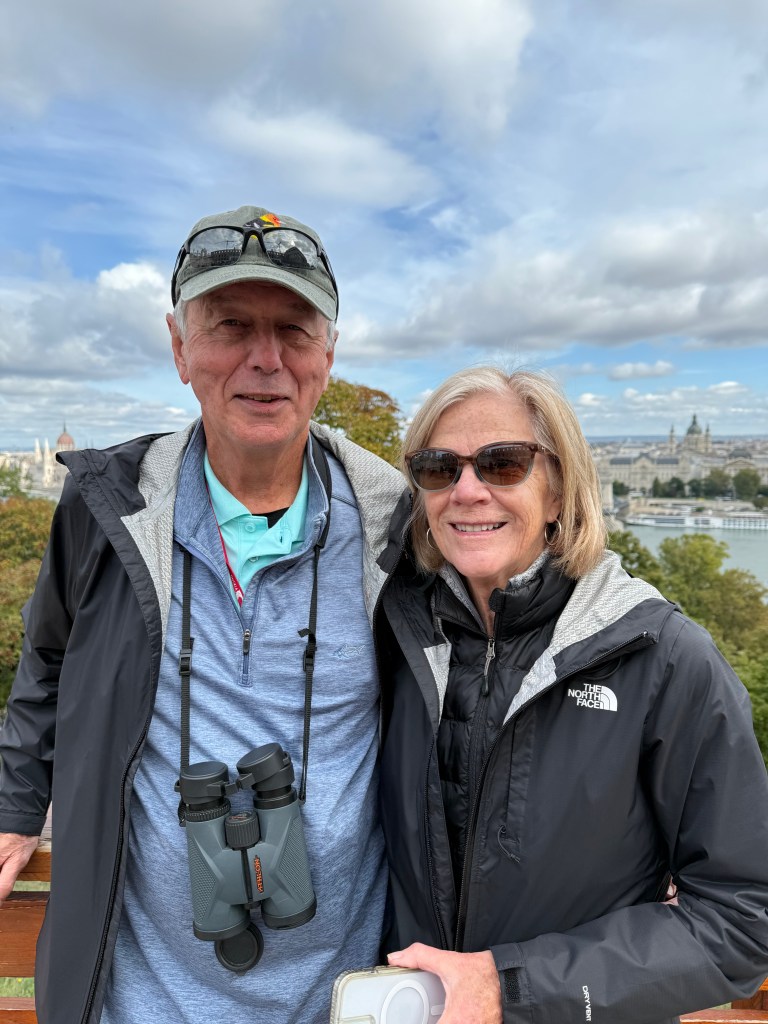
Duane and Lynn
Time to go home. An early morning pic from the ship before we head to the airport.

 Site Title